Foundations: The Evolution and Principles of Additive Manufacturing
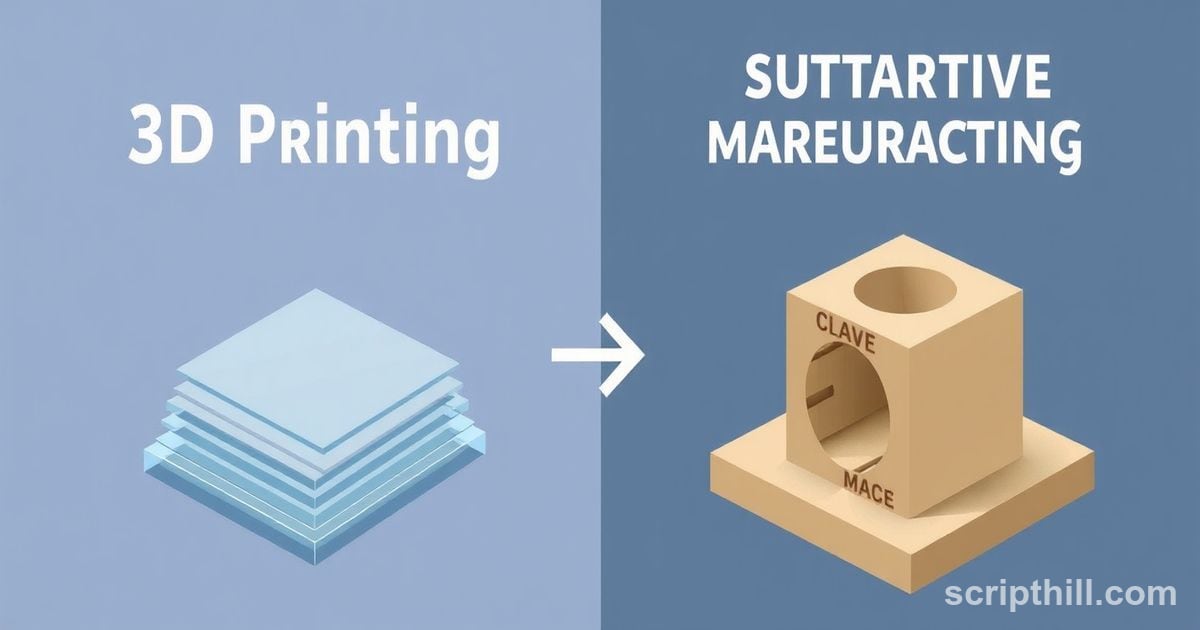
3D printing, more formally known as additive manufacturing (AM), is a revolutionary fabrication process that builds three-dimensional objects layer by painstaking layer from a digital design. Unlike traditional manufacturing methods that either remove material (subtractive manufacturing) or form it (formative manufacturing), 3D printing adds material only where it's needed. This fundamental difference allows for unprecedented design freedom, enabling the creation of intricate geometries, internal lattice structures, and parts with optimized weight and strength that are impossible or prohibitively expensive to produce with conventional techniques.
The concept of building objects layer by layer isn't entirely new, but its practical application began to take shape in the 1980s. Early pioneers like Hideo Kodama, who filed a patent for a rapid prototyping system in 1981, laid foundational groundwork. However, it was Charles Hull's 1984 invention of stereolithography (SLA) and the subsequent co-founding of 3D Systems that truly commercialized the technology, giving birth to what was initially termed "rapid prototyping." For decades, 3D printing primarily served to quickly produce prototypes for design verification. As the technology matured, materials diversified, and machines became more robust and precise, its scope expanded beyond prototypes to functional parts, tooling, and eventually, end-use components across industries like aerospace, medical, automotive, and consumer goods. This evolution transformed its designation from "rapid prototyping" to "additive manufacturing," reflecting its growing role in direct production.
The distinction between additive and subtractive manufacturing is crucial. Imagine shaping a sculpture:
- Subtractive Manufacturing: Starts with a large block of material (e.g., wood, metal) and removes portions using tools like drills, saws, or milling machines until the desired shape remains. This method often generates significant material waste and is limited by tool access to internal geometries.
- Additive Manufacturing: Starts with nothing and builds the object by depositing material, typically in thin layers, until the complete object is formed. This "bottom-up" approach minimizes waste and allows for highly complex internal structures without the limitations of tool access.
A diverse array of technologies falls under the 3D printing umbrella, each leveraging different physical principles to achieve layer-by-layer construction. Understanding these core technologies is essential for appreciating the breadth and depth of additive manufacturing's capabilities.
Primary 3D Printing Technologies
| Technology | Mechanism | Key Materials | Advantages | Limitations |
|---|---|---|---|---|
| FDM/FFF | Extrudes molten thermoplastic filament layer-by-layer. | Thermoplastics (PLA, ABS, PETG, Nylon) | Affordable, wide material choice, easy to use, good for prototypes/tooling. | Visible layer lines, anisotropic properties, slower for complex parts, needs supports. |
| SLA | UV laser cures liquid photopolymer resin layer-by-layer. | Photopolymer Resins | High resolution, smooth surface finish, fine detail, good for intricate models. | Brittle materials, post-processing needed, generally smaller build volumes. |
| SLS | High-power laser fuses polymer powder particles layer-by-layer. | Polyamides (Nylon 11/12), TPU | Strong functional parts, no supports needed, complex geometries, good for end-use. | Granular surface, higher cost, limited material range. |
| DMLS/SLM | High-power laser fully melts metal powder layer-by-layer. | Metal alloys (Stainless Steel, Titanium, Aluminum) | Fully dense metal parts, high strength, complex metal geometries, high performance. | Very high cost, specialized equipment, extensive post-processing, limited build size. |
| Binder Jetting | Print head deposits liquid binder onto powder bed (metal, sand, ceramic). | Metals, Sand, Ceramics | Large build volumes, wide material range, no heat distortion, good for full-color. | Fragile "green" state, requires extensive post-processing (sintering), lower mechanical properties without infiltration. |
The selection of a 3D printing technology is a critical decision driven by the application's specific requirements, including desired material properties, surface finish, dimensional accuracy, economic considerations, and production volume. Each method contributes uniquely to the expanding capabilities of additive manufacturing, continuously pushing the boundaries of design and fabrication.
Beyond the Basics: Advanced Materials and Next-Gen Capabilities
The evolution of 3D printing from a niche prototyping tool to a robust manufacturing method is intrinsically linked to the revolution in material science. Initially dominated by thermoplastics like PLA and ABS, the technology's true potential began to unlock as researchers and engineers pushed the boundaries of printable substances. Today, the landscape is incredibly diverse, encompassing everything from high-strength metals and durable ceramics to complex composites, responsive smart materials, and even living bio-inks. This expansion has dramatically broadened the applications of additive manufacturing, moving it firmly into high-performance industrial, medical, and consumer sectors.
Metals, in particular, have seen monumental strides, enabling the creation of parts with unparalleled strength and heat resistance. Techniques such as Selective Laser Melting (SLM), Electron Beam Melting (EBM), and Binder Jetting now routinely process alloys of titanium, aluminum, stainless steel, and nickel. These advancements are critical for aerospace components, custom medical implants, and robust industrial tooling, where precise geometries and material integrity are paramount. Similarly, ceramics can now be 3D printed, offering solutions for applications requiring extreme temperature resistance, chemical inertness, and hardness, such as furnace components, dental crowns, and specialized electronics.
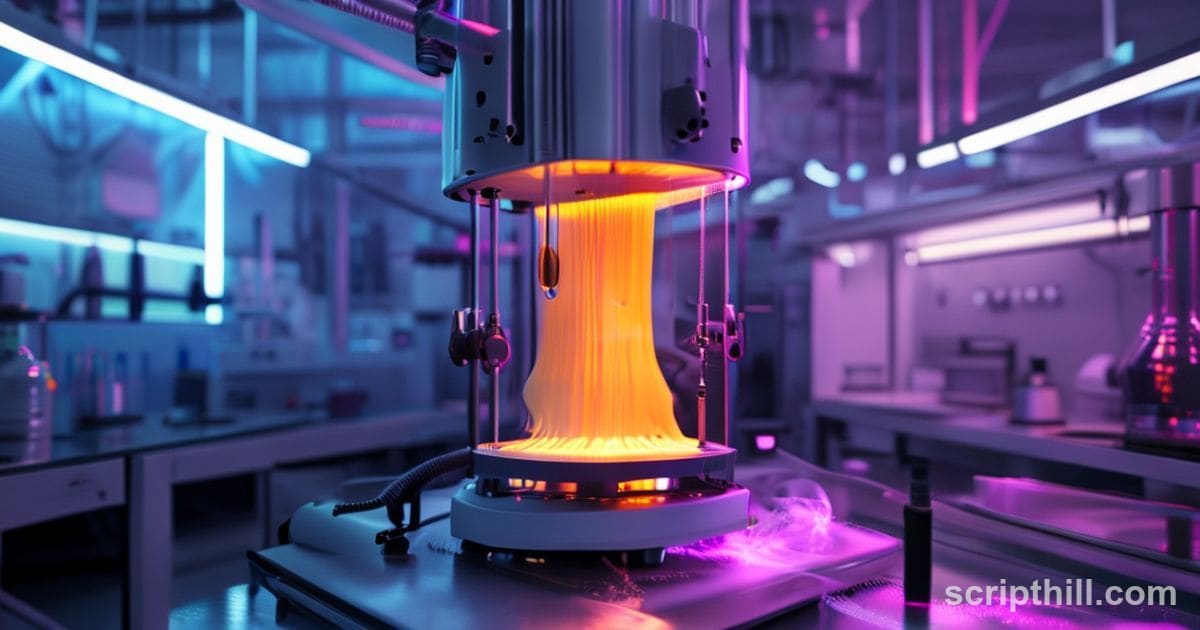
The integration of composite materials has further propelled the capabilities of 3D printing. By embedding reinforcing fibers like carbon fiber, fiberglass, or Kevlar into polymer matrices, engineers can print parts with an exceptional strength-to-weight ratio, rivaling traditionally manufactured components. This is transformative for industries like automotive, sports equipment, and drone manufacturing. Beyond static strength, the emergence of "smart materials" is opening entirely new avenues. These materials, which can change properties in response to external stimuli such as temperature, light, or electric fields, include shape-memory polymers, self-healing materials, and conductive inks, paving the way for adaptive structures, responsive sensors, and integrated electronics within printed objects.
Perhaps one of the most exciting, yet challenging, frontiers is bioprinting with bio-inks. These biocompatible materials, often laden with living cells, are meticulously deposited layer by layer to construct tissues and even rudimentary organs. While still largely in research and development, the promise of personalized medicine, drug testing platforms, and ultimately, replacement organs, underscores its profound potential. Closely related is the advancement in multi-material printing, which allows for the simultaneous deposition and fusion of different materials within a single print. This capability is crucial for creating objects with tailored properties across different regions, like a component with a rigid core and a flexible exterior, or a device integrating structural elements with embedded circuitry.
Alongside material breakthroughs, the underlying printing processes themselves have seen significant enhancements in speed and precision. Faster print speeds, achieved through innovations in printhead kinematics, material extrusion rates, and laser power, are driving higher throughputs, making 3D printing viable for mass customization and production. Simultaneously, precision has reached microscopic scales, enabling the creation of intricate microfluidic devices, optical components, and complex metamaterials. Specialized printers are now being developed for extreme environments, such as printing spare parts in space or constructing underwater infrastructure, and for miniature scales, down to nanoscale manufacturing for advanced electronics and biomedical devices.
Industry leaders consistently emphasize that material innovation is the core driver of 3D printing's future. As [hypothetical expert] Dr. Evelyn Reed, Head of Materials Research at Stratasys, eloquently puts it,
"The next frontier in 3D printing isn't just about bigger or faster, but about smarter and more versatile materials. It's about empowering designers to think beyond traditional manufacturing constraints and leverage the inherent capabilities of new materials." This philosophy highlights the shift towards functionality and integration, propelled by advancements in several key material categories:
- High-Performance Metals: For aerospace, automotive, and medical applications.
- Engineering-Grade Ceramics: For extreme conditions and chemical resistance.
- Fiber-Reinforced Composites: For lightweight strength and durability.
- Smart and Functional Polymers: For adaptive, responsive, and integrated systems.
- Bio-inks: For regenerative medicine and pharmaceutical research.
These material innovations, combined with ever-increasing precision and speed, continue to redefine what's possible with additive manufacturing, pushing it further into critical and novel applications across every sector.
Revolutionizing Industries: Current and Emerging Applications
The transformative power of 3D printing is rapidly reshaping the industrial landscape, moving beyond mere prototyping to fundamental shifts in how products are designed, manufactured, and delivered. This technology enables unprecedented levels of customization, facilitates efficient on-demand production, and inherently simplifies complex supply chains across a multitude of sectors.
In aerospace, the pursuit of lighter, stronger, and more fuel-efficient components is relentless. Additive manufacturing offers a revolutionary path forward. Manufacturers can now print intricate, lattice-structured parts, such as engine brackets, air ducts, and even entire fuel nozzles for engines like GE Aviation's LEAP series. These parts, often impossible to produce with traditional subtractive methods, significantly reduce weight, enhance performance, and consolidate multiple components into a single printed structure. This leads to substantial savings in fuel consumption and assembly time.
Healthcare stands out as a sector where 3D printing delivers deeply personal and life-changing benefits.
- Bioprinting: While still in its nascent stages, bioprinting holds the promise of fabricating human tissues and organs for drug testing, disease modeling, and eventually, transplantation, alleviating critical donor shortages.
- Prosthetics and Implants: Patients can receive custom-fit prosthetics that are more comfortable, functional, and aesthetically pleasing than their mass-produced counterparts. Similarly, patient-specific surgical guides and custom implants (e.g., cranial implants, hip replacements) are designed using medical imaging data, leading to enhanced surgical precision and improved patient outcomes.
- Surgical Planning Models: Highly accurate anatomical models derived from patient scans allow surgeons to meticulously plan complex procedures, practice difficult maneuvers, and explain conditions to patients with unparalleled clarity.
The automotive industry leverages 3D printing for both rapid innovation and specialized production. Initially adopted for rapid prototyping, enabling designers and engineers to quickly iterate on new designs and test fit and function, its role has expanded. Beyond prototyping, 3D printing is now used to create bespoke tooling, jigs, and fixtures for assembly lines, as well as low-volume, high-performance parts for luxury vehicles, classic car restorations, or even motorsports. This allows for unparalleled vehicle customization and accelerates development cycles.
Even the foundational sector of construction is being redefined. Companies are using massive 3D printers to construct entire homes and structural components, often using local or recycled materials. This "habitat printing" promises faster build times, significantly reduced labor costs, less material waste, and the ability to erect structures in remote or challenging environments, addressing housing shortages and disaster relief efforts with unprecedented efficiency.
For consumer goods, the focus shifts to hyper-personalization and on-demand manufacturing. From custom-fit eyewear and intricate jewelry to unique footwear like Adidas's Futurecraft 4D midsoles, 3D printing empowers consumers to co-create products tailored precisely to their needs and aesthetic preferences. This paradigm minimizes inventory, reduces waste associated with mass production, and brings truly unique items to market faster.
Across these diverse applications, the core advantages of 3D printing consistently emerge:
| Key Benefit | Description |
|---|---|
| Customization | Tailoring products precisely to individual needs, complex geometries, or unique specifications. |
| On-Demand Production | Manufacturing items only when needed, minimizing inventory, waste, and storage costs. |
| Supply Chain Simplification | Localizing production, reducing reliance on complex global logistics, and enabling faster iteration. |
This convergence of design freedom, manufacturing agility, and localized production capabilities positions 3D printing not merely as an alternative manufacturing method, but as a critical driver for innovation, sustainability, and economic resilience across virtually every industrial vertical.
The Horizon: Future Trends, AI Integration, and Sustainable Solutions
The horizon for 3D printing is not merely about incremental improvements but a profound transformation driven by synergistic technologies and an increasing focus on environmental stewardship. At the forefront of this evolution is the integration of Artificial Intelligence (AI) and Machine Learning (ML), poised to revolutionize every facet of additive manufacturing, from design to deployment.
AI and ML are already beginning to unlock unparalleled potential in design optimization. Generative design algorithms, powered by AI, can rapidly explore millions of design permutations based on specified parameters like weight, strength, and material properties, often yielding organic, complex geometries unachievable through traditional human-led design. This not only accelerates product development but also pushes the boundaries of what's structurally possible, leading to lighter, stronger, and more efficient parts.
# Conceptual AI-driven generative design parametersdesign_goals = {"material_type": "titanium_alloy","target_weight_reduction_percent": 30,"structural_load_points": [(x1, y1, z1), (x2, y2, z2)],"thermal_conductivity_max": 25.0}# AI engine would iteratively generate and test designs# based on these goals, returning optimized geometries.optimized_design = generative_ai_engine.optimize_part(design_goals)
Beyond design, AI's role extends to the operational efficiency of 3D print farms. Predictive maintenance, utilizing ML algorithms to analyze sensor data from printers, can anticipate potential equipment failures before they occur, minimizing downtime and optimizing maintenance schedules. Coupled with AI-driven automated print farms, which manage print queues, material handling, and quality control autonomously, we envision a future of "lights-out" manufacturing where production runs without human intervention, dramatically increasing throughput and reducing labor costs.
Looking beyond current capabilities, future trends delve into the very nature of materials and objects. 4D printing introduces a temporal dimension, where objects printed from "smart" materials can change shape, properties, or function in response to external stimuli like heat, light, or moisture. This opens doors for self-assembling structures, deployable medical implants that activate inside the body, or soft robotics that adapt to their environment. Simultaneously, micro-3D printing continues to push the boundaries of resolution, enabling the creation of intricate structures at the micron and even nanometer scale, with applications spanning micro-optics, advanced electronics, and bespoke medical devices with unprecedented precision.
The culmination of these advancements points towards the realization of fully autonomous manufacturing ecosystems. These systems, integrating AI-driven design, robotic production, and self-optimizing processes, could enable hyper-localized, on-demand manufacturing. As one industry observer put it:
"The factory of the future won't just be smart; it will be self-aware, capable of designing, producing, and maintaining itself with minimal human oversight, truly decentralizing production."
Alongside technological prowess, a critical focus for the future of 3D printing is sustainability. The inherent waste reduction benefits of additive manufacturing, which builds objects layer by layer rather than cutting away material, are already significant. However, the industry is increasingly prioritizing sustainable practices across the entire lifecycle. This includes:
- Development of bio-based and recycled materials: Reducing reliance on virgin plastics and metals.
- Energy-efficient printing processes: Lowering the carbon footprint of production.
- Designing for disassembly and recyclability: Ensuring printed products can be easily deconstructed and their materials reused.
This commitment to sustainability is driving the integration of 3D printing into the broader circular economy. Efforts are underway to develop robust material recycling processes specifically for common 3D printing polymers and metals, creating closed-loop systems where spent prints or failed batches are reprocessed into new feedstock. This vision not only minimizes waste but also reduces the environmental impact of raw material extraction and processing, positioning 3D printing as a cornerstone technology for a truly sustainable industrial future.
Navigating Challenges and Shaping the Future of Production
Despite its revolutionary potential, the widespread adoption of 3D printing faces a complex array of limitations and hurdles that demand strategic navigation. The most immediate barriers often revolve around economics and production efficiency. For true mass production, additive manufacturing's speed remains a significant bottleneck compared to traditional methods like injection molding, which can churn out thousands of identical parts in minutes. While advances like multi-laser systems and increased build volumes are improving throughput, the per-part cost for large quantities often still struggles to compete, primarily due to slower cycle times and the cost of specialized materials. The initial capital investment for industrial-grade 3D printers can also be substantial, limiting accessibility for smaller enterprises.
Another critical challenge lies in material property validation and standardization. For functional components, especially in demanding sectors like aerospace, medical, or automotive, ensuring consistent mechanical, thermal, and chemical properties throughout a 3D printed part is paramount. The anisotropic nature of many 3D printed materials, where properties vary depending on print orientation, further complicates this. Robust testing protocols, industry-wide standards, and exhaustive certification processes are still evolving, creating a validation gap that hinders faster adoption for critical applications. Without reliable assurance that a 3D printed part will perform exactly as expected under stress, hesitation will persist.
The evolving landscape of intellectual property (IP) and regulatory frameworks also presents significant challenges. The very nature of 3D printing, which allows digital designs to be easily shared and fabricated anywhere, opens new avenues for IP infringement. Protecting proprietary designs becomes increasingly difficult when digital files can be copied and printed with relative ease. Concurrently, regulatory bodies are playing catch-up, struggling to define and enforce standards for:
- Product safety and quality control: Especially for consumer goods and medical implants.
- Environmental impact: Including material waste, energy consumption, and emissions.
- Workplace safety: Pertaining to new materials and processes.
- Data security: Safeguarding digital design files from cyber threats.
"The democratization of manufacturing via 3D printing fundamentally challenges existing frameworks, from design ownership to liability, necessitating a proactive, collaborative approach from policymakers and industry alike."
The societal and economic impact of 3D printing will be profound. While it promises job creation in new sectors like digital design, materials science, and machine operation, it also poses a risk of job displacement in traditional manufacturing roles. However, it also offers a path to reshoring manufacturing, shortening supply chains, and increasing resilience against global disruptions, thereby fostering localized economies. This shift will necessitate significant investment in skill development, moving beyond traditional factory floor expertise towards a workforce proficient in CAD software, advanced materials engineering, post-processing techniques, and data analytics. Educational institutions and vocational programs must adapt quickly to cultivate these new skill sets to avoid a talent gap.
Future policy considerations must therefore be multi-faceted, focusing on fostering innovation while mitigating risks. This includes developing international standards for materials and processes, strengthening IP protections tailored for digital manufacturing, investing in R&D for advanced materials and faster printing technologies, and creating robust educational pipelines. Ultimately, 3D printing is not just another manufacturing process; it is a paradigm shift that will fundamentally reshape global manufacturing, innovation cycles, and how products are conceived, produced, and consumed, leading towards an era of unprecedented customization and efficiency.