
Modern Lunar Resurgence: Programs and Partnerships
The landscape of lunar exploration has undergone a profound transformation, moving from the Cold War-era race to a collaborative, multi-stakeholder endeavor aimed at sustainable presence and deeper space exploration. This modern lunar resurgence is characterized by an unprecedented level of international cooperation and commercial participation, fundamentally reshaping how humanity returns to and utilizes the Moon.
At the heart of this new era is NASA's Artemis program, an ambitious initiative designed to return humans to the lunar surface for the first time since Apollo, including the first woman and first person of color. Beyond planting flags, Artemis aims to establish a long-term human presence through the Lunar Gateway orbital outpost and regular surface missions. This foundational infrastructure is intended to support scientific research, test technologies for future Mars missions, and foster a robust lunar economy. The program relies on the powerful Space Launch System (SLS) rocket and the Orion spacecraft, developed in close partnership with international allies.

The Artemis program is structured in a series of increasingly complex missions:
| Mission | Status/Goal | Key Milestones | Expected Timeline |
|---|---|---|---|
| Artemis I | Uncrewed flight test of SLS and Orion | Orion orbited the Moon; successful splashdown | Completed (2022) |
| Artemis II | Crewed lunar flyby; first humans to the Moon since Apollo | Test critical systems with crew | ~2025 |
| Artemis III | Human lunar landing; first woman and person of color on the Moon | Landing near the lunar south pole; multiple spacewalks | ~2026 |
| Artemis IV+ | Sustainable exploration; Gateway assembly; crewed missions to Gateway & surface | Long-term presence; resource utilization; Mars preparation | Late 2020s onwards |
Integral to the Artemis strategy is the Commercial Lunar Payload Services (CLPS) initiative. NASA contracts private American companies to deliver scientific instruments, technology demonstrations, and other payloads to the lunar surface. This innovative approach significantly reduces costs and accelerates mission timelines, fostering a competitive commercial space industry. Companies like Astrobotic Technology, Intuitive Machines, and Firefly Aerospace are leading these efforts, with several successful and upcoming missions showcasing the viability of this public-private partnership model for lunar logistics.
International partners play a crucial role in expanding the reach and capabilities of lunar exploration:
- European Space Agency (ESA): A key partner for Orion's Service Module and elements of the Lunar Gateway (e.g., I-HAB module). ESA is also developing the European Large Logistics Lander (EL3) and Lunar Pathfinder orbiter.
- Japan Aerospace Exploration Agency (JAXA): Contributing to the Gateway and collaborating on advanced lunar surface mobility concepts. JAXA's SLIM (Smart Lander for Investigating Moon) achieved a precise lunar landing in 2024, demonstrating key technology.
- Indian Space Research Organisation (ISRO): With its successful Chandrayaan program, including the Chandrayaan-3 lander-rover mission in 2023, ISRO has established India as a leading lunar explorer. It is also collaborating with JAXA on the LUPEX mission to explore the lunar poles.
- China National Space Administration (CNSA): Pursuing its own ambitious and independent lunar program with the Chang'e series of robotic missions, which have already achieved sample returns and far-side landings. China is also advocating for an International Lunar Research Station (ILRS) as a potential alternative or complementary framework.
This complex web of governmental programs, commercial ventures, and international collaborations defines the modern lunar resurgence. It's a testament to a shared vision: to leverage the Moon not just as a destination for exploration, but as a proving ground for technologies, a source of scientific discovery, and a potential staging post for humanity's journey deeper into the solar system.
Engineering the Lunar Journey: Key Technologies
Returning humanity to the Moon, not just for flags and footprints but for sustainable presence and deeper exploration, necessitates a revolutionary leap in engineering capabilities. The foundational technologies enabling these ambitious lunar endeavors are far more sophisticated than those of the Apollo era, focusing on efficiency, autonomy, and long-term viability.
Advanced propulsion systems are crucial for making lunar travel more efficient and expeditions further afield feasible. While traditional chemical rockets provide high thrust for launch, their efficiency wanes in deep space. Electric propulsion systems, such as ion or Hall effect thrusters, offer extremely high specific impulse, meaning they get more thrust per unit of propellant mass. Although they provide low thrust over long periods, they drastically reduce fuel requirements for orbital maneuvers or transfer to lunar orbit, making them ideal for cargo and slow-but-steady crew transfers. Looking further, nuclear thermal propulsion (NTP) concepts offer a "best of both worlds" scenario: high thrust comparable to chemical rockets combined with a significantly higher specific impulse, potentially cutting transit times to Mars or the Moon by half, greatly reducing crew exposure to radiation.
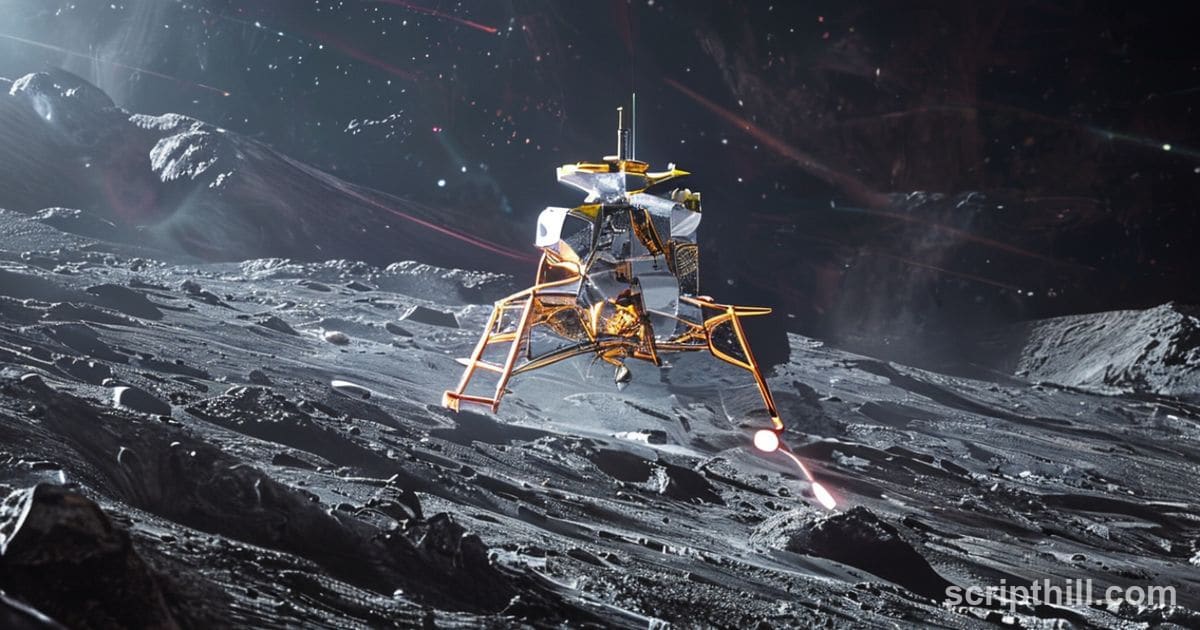
Precise and safe lunar landings are paramount, especially as missions target more challenging terrains like polar regions or lava tubes. Autonomous landing and hazard avoidance systems leverage cutting-edge sensor technology and AI. LiDAR (Light Detection and Ranging) and stereo cameras map the landing zone in real-time, feeding data into terrain-relative navigation (TRN) algorithms. These systems compare live sensor data with pre-loaded orbital maps to pinpoint the lander's exact position. Onboard computers then autonomously detect hazards such as boulders or craters, guiding the craft to a safer touchdown point, dramatically reducing the risks associated with manual piloting or pre-selected "flat" sites.
Robust communication infrastructure is another cornerstone. Direct-to-Earth communication faces line-of-sight limitations, particularly for missions operating on the lunar far side or in polar craters. The planned Lunar Gateway will serve as a crucial communications relay and staging post in orbit around the Moon, providing continuous contact for missions anywhere on the lunar surface. Furthermore, optical communications (laser comms) are poised to revolutionize data transmission. Unlike traditional radio frequency (RF) systems, laser communications can transmit vastly more data using less power and smaller antennae, crucial for bandwidth-intensive tasks like high-definition video streaming, scientific data dumps, and future virtual reality operations.
| Communication Type | Data Rate (Typical) | Bandwidth | Power Consumption | Interference Susceptibility |
|---|---|---|---|---|
| Radio Frequency | Kilobits to Megabits/sec | Lower | Moderate to High | Moderate |
| Optical (Laser) | Gigabits/sec | Very High | Low | Low |
For extended stays, advanced life support systems (ALS) are indispensable. These closed-loop systems are designed to recycle nearly everything, from water and oxygen to CO2 and waste, minimizing the need for resupply from Earth. Technologies include physical-chemical systems for air and water purification, and future bioregenerative systems that use plants or microorganisms to process waste and produce food and oxygen. Coupled with ALS, In-Situ Resource Utilization (ISRU) technologies are foundational for long-duration human presence. This involves extracting and processing resources directly from the Moon itself. Key ISRU processes include:
- Water Ice Extraction: Heating lunar regolith in permanently shadowed regions to sublimate water ice, which can then be collected and purified for drinking water, oxygen production, or rocket fuel.
- Oxygen Production: Utilizing processes like molten regolith electrolysis to extract oxygen from lunar soil, primarily for breathable air and propellant.
- Regolith-based Construction: Sintering or 3D printing lunar regolith to create habitats, landing pads, or radiation shielding, reducing the colossal cost of transporting building materials from Earth.
Finally, sophisticated robotics will act as humanity's indispensable partners. Autonomous rovers, equipped with AI and advanced manipulators, will conduct scientific exploration, prepare landing sites, and assist in constructing habitats. These robots can undertake hazardous tasks, perform maintenance, and manage ISRU operations without direct human supervision. Programming these complex interactions requires robust control systems:
# Conceptual Python snippet for a lunar rover task sequencedef execute_isru_sequence(rover_id, target_location):print(f"Rover {rover_id}: Navigating to {target_location} for ISRU operations.")# Implement navigation, hazard avoidance, and resource detectionif navigate_to(target_location) and detect_resources("water_ice"):print(f"Rover {rover_id}: Commencing water extraction at {target_location}.")# Execute extraction, processing, and storageif perform_extraction_and_storage():print(f"Rover {rover_id}: Water extraction complete. Awaiting further commands.")return Trueelse:print(f"Rover {rover_id}: Extraction failed. Reporting status.")return Falseelse:print(f"Rover {rover_id}: Unable to reach target or detect resources.")return False# Example usageexecute_isru_sequence("LunaBot-1", "Shackleton_Crater_Rim")
This integration of robotics, AI, and advanced material science is essential for establishing a truly sustainable and expandable lunar outpost, paving the way for future deep space exploration.
Conquering Lunar Challenges: Obstacles and Innovations
The Moon, despite its proximity, presents an array of formidable challenges to long-term human and robotic exploration. Overcoming these obstacles necessitates ingenious engineering and scientific solutions, pushing the boundaries of what's possible in space technology.
One of the most profound dangers is the extreme radiation environment. Unlike Earth, the Moon lacks a substantial atmosphere or a protective global magnetic field, leaving its surface exposed to both unpredictable Solar Particle Events (SPEs) and constant, high-energy Galactic Cosmic Rays (GCRs). These can cause acute radiation sickness, long-term cancer risks, and damage to electronics. Innovations include developing multi-layered shielding materials, often incorporating hydrogen-rich compounds like water or polyethylene, to absorb or scatter radiation. Future concepts explore active magnetic shields to deflect charged particles, and even pharmaceutical countermeasures for astronauts to enhance DNA repair mechanisms.
Equally challenging is the ubiquitous lunar dust, or regolith. This fine, abrasive, and electrostatically charged material clings to everything, infiltrating seals, scratching optical surfaces, and causing mechanical wear on equipment. Its sharp, microscopic edges pose a serious health risk if inhaled. Mitigating its impact is crucial for mission longevity. Solutions being explored include:
- Electrostatic dust shields: Using electric fields to repel dust particles from surfaces.
- Specialized seals and covers: Designing robust, multi-layered seals for habitats and equipment that can withstand dust ingress.
- Self-cleaning surfaces: Developing materials with low adhesion properties or active vibratory cleaning mechanisms.
- Dust-repellent coatings: Applying novel materials that resist static charge buildup and prevent dust from sticking.
- Automated cleaning robots: Small rovers designed specifically to maintain sensitive equipment.
The Moon's stark absence of atmosphere also leads to radical thermal management issues. Temperatures can swing from a scorching +127°C during the lunar day to a frigid -173°C during the two-week lunar night. Protecting sensitive electronics, scientific instruments, and human habitats requires sophisticated thermal control systems. This involves advanced Multi-Layer Insulation (MLI), passive radiators, active fluid loops that circulate coolants, and phase-change materials that absorb and release heat to stabilize temperatures. Radioisotope heater units (RHUs), which generate heat from radioactive decay, are also vital for surviving the intense cold of the lunar night, particularly for long-duration landers and rovers.
For extended missions, power generation and storage become critical. Solar panels are effective during lunar day, but the two-week lunar night demands robust energy storage or alternative power sources. Locations near the lunar poles, while offering potential access to water ice, also present challenging lighting conditions with low-angle sunlight. Innovating in this area includes developing highly efficient, lightweight, and deployable solar arrays, along with advanced battery technologies like solid-state batteries. A significant focus is also on small modular nuclear fission reactors, such as NASA's Kilopower project, designed to provide continuous, high-wattage power independently of sunlight, enabling permanent bases.
Communication delays also complicate lunar operations. The round-trip light-speed delay between Earth and the Moon averages 2.6 seconds, making real-time teleoperation impossible and requiring significant autonomy for lunar systems. Bandwidth limitations further restrict data transmission. Future solutions include a network of lunar relay satellites, like those envisioned for the Lunar Gateway, to ensure continuous communication coverage. Advanced optical communication systems (laser comms) are also being developed to provide much higher data rates than traditional radio frequencies.
Finally, human health considerations for prolonged lunar stays demand comprehensive strategies. Astronauts face continued radiation exposure, the physiological effects of partial gravity (one-sixth G), including bone and muscle loss, and the psychological stresses of isolation and confinement.
As Dr. Jeffrey V. Rosenblatt, a former NASA Chief of Medical Operations, once stated regarding the long-term human presence in space:
"We are not just designing hardware; we are designing for human survival and thriving in an alien environment. Every system, every procedure, must account for the biological and psychological resilience of the crew."
Innovations include enhanced shielding within habitats and transport vehicles, advanced exercise regimens and artificial gravity concepts to mitigate physiological degradation, comprehensive telemedicine capabilities for remote medical care, and robust psychological support programs to maintain crew well-being. These multifaceted challenges demand an integrated approach, blending cutting-edge science with practical engineering to make sustainable lunar exploration a reality.
The Future of Lunar Exploration: Permanent Presence & Beyond
The era of short-duration "flags-and-footprints" missions is giving way to a new, ambitious vision: establishing a permanent human presence on the Moon. This long-term strategy transcends mere visitation, aiming to transform our celestial neighbor into a vibrant hub for science, industry, and a crucial stepping stone for humanity's journey deeper into the cosmos.
Establishing a Permanent Foothold
To achieve a sustained presence, fundamental infrastructure is paramount. Initial habitats will likely be inflatable modules or structures built partially underground for radiation shielding and thermal stability, eventually expanded by robotic construction and 3D printing using lunar regolith. Power will come from advanced solar arrays, potentially augmented by small modular fission reactors for continuous operation, especially during the long lunar night. Essential elements of such a base include:
- Pressurized Habitation Modules: Providing safe living and working spaces for astronauts, protecting them from the vacuum and radiation.
- Life Support Systems: Advanced closed-loop systems for air, water, and waste recycling to minimize resupply from Earth.
- Power Generation: Robust and reliable sources like solar farms with battery storage, potentially complemented by nuclear micro-reactors for consistent energy.
- Communication Hubs: High-bandwidth relays for seamless data transfer to Earth and intra-lunar communication.
- Resource Processing Plants: Facilities for extracting and refining local materials.
- Landing Pads and Mobility: Designated landing zones and a fleet of specialized rovers for surface transportation and exploration.
The Moon as a Scientific Powerhouse
With its stable environment, low gravity, and lack of atmospheric interference, the Moon offers unparalleled opportunities for advanced scientific research. Its far side, perpetually shielded from Earth's radio noise, is an ideal location for radio astronomy, enabling the detection of faint signals from the early universe that are otherwise obscured. Lunar observatories could house large optical and infrared telescopes, benefiting from the vacuum and extreme cold to achieve unprecedented resolution and sensitivity. Geologically, the Moon provides a pristine record of the early solar system, free from plate tectonics and significant erosion, offering crucial insights into planetary formation and evolution through deep core sampling and extensive mapping.
Lunar Resources: Fueling Future Endeavors
The strategic importance of lunar resources is immense for achieving sustained operations. Water ice, trapped in permanently shadowed craters at the poles, is perhaps the most valuable. It can be electrolyzed into hydrogen and oxygen – breathable air, potable water, and, crucially, rocket propellant. This "in-situ resource utilization" (ISRU) dramatically reduces the cost and complexity of space travel by eliminating the need to launch all materials from Earth's deep gravity well. Another resource of significant interest is Helium-3, a light, non-radioactive isotope rare on Earth but relatively abundant in lunar regolith, deposited by solar winds over billions of years. While still a long-term prospect, Helium-3 holds promise as a clean fuel for future fusion reactors, potentially revolutionizing terrestrial energy production.
| Resource | Primary Uses | Impact on Space Operations |
|---|---|---|
| Water Ice | Propellant (H₂/O₂), Life Support, Radiation Shielding | Reduces launch mass from Earth, enables lunar refueling |
| Lunar Regolith | Construction Material, Oxygen Source | Local manufacturing, habitat shielding, breathing oxygen |
| Helium-3 | Potential Fusion Fuel | Long-term clean energy, future economic driver |
| Metals (e.g., Fe) | Manufacturing, Electronics | Local production of components, infrastructure expansion |
Economic Development and Lunar Industries
Beyond science and sustenance, the Moon harbors nascent economic potential. Resource extraction itself could evolve into a multi-billion dollar industry, supplying propellants and materials for orbital infrastructure or even Earth. Lunar tourism, once confined to science fiction, could become a reality for the ultra-wealthy, offering unparalleled views and experiences. More significantly, the Moon's unique environment – its vacuum, microgravity, and extreme temperatures – makes it an ideal location for specialized manufacturing processes that are difficult or impossible to perform efficiently on Earth. This could include high-purity materials, advanced optics, or even medical research requiring a low-gravity environment. Developing these industries creates self-sustaining ecosystems that ensure continued investment and interest in lunar operations, moving beyond government-funded exploration to a truly multi-stakeholder presence.
Gateway to the Stars: Proving Ground for Deep Space
Perhaps the most compelling strategic advantage of a permanent lunar presence is its role as a proving ground for crewed missions to Mars and beyond. The Moon offers a relatively close-at-hand, yet challenging, environment to test:
- Advanced life support systems for extended durations in remote settings.
- Radiation shielding techniques and countermeasures for deep space environments.
- In-situ resource utilization (ISRU) technologies crucial for Mars missions.
- New propulsion systems and autonomous robotics.
- Human physiological and psychological responses to long-term isolation and reduced gravity in an off-world environment.
Operating on the Moon allows for rapid iteration and troubleshooting, with Earth still close enough for support and emergency return, unlike a years-long journey to Mars. It acts as an indispensable "testbed" for the systems and resilience required for interplanetary travel. As former NASA Administrator Jim Bridenstine articulated:
"The Moon is the indispensable springboard to Mars."
This integrated approach – combining scientific discovery, resource utilization, economic development, and strategic testing – cements the Moon's role not just as a destination, but as an essential cornerstone for humanity's expansion throughout the solar system.