

The Dawn of Space Tourism: A New Frontier
Space tourism, at its core, represents the commercialization of human spaceflight, allowing private citizens to journey beyond Earth's atmosphere not for scientific missions or national defense, but for leisure, adventure, and the profound experience of seeing our home planet from an entirely new vantage point. It's the ultimate vacation, transforming the once exclusive domain of government-trained astronauts into an accessible, albeit still elite, travel destination.
The dream of space travel for the masses has been woven into the fabric of human imagination for centuries, from Jules Verne's "From the Earth to the Moon" in the 19th century to the popular science fiction of the 20th. For decades after the space race began with Sputnik and Yuri Gagarin, space was the sole preserve of state-sponsored agencies like NASA and Roscosmos, driven by Cold War geopolitics and scientific discovery. However, the 21st century heralded a pivotal shift. On April 28, 2001, American businessman Dennis Tito made history aboard a Russian Soyuz spacecraft, becoming the world's first self-funded space tourist. His journey to the International Space Station (ISS) was a watershed moment, demonstrating a viable commercial market for private space travel and igniting the ambitions of a new generation of aerospace entrepreneurs.
Classifications of Space Tourism
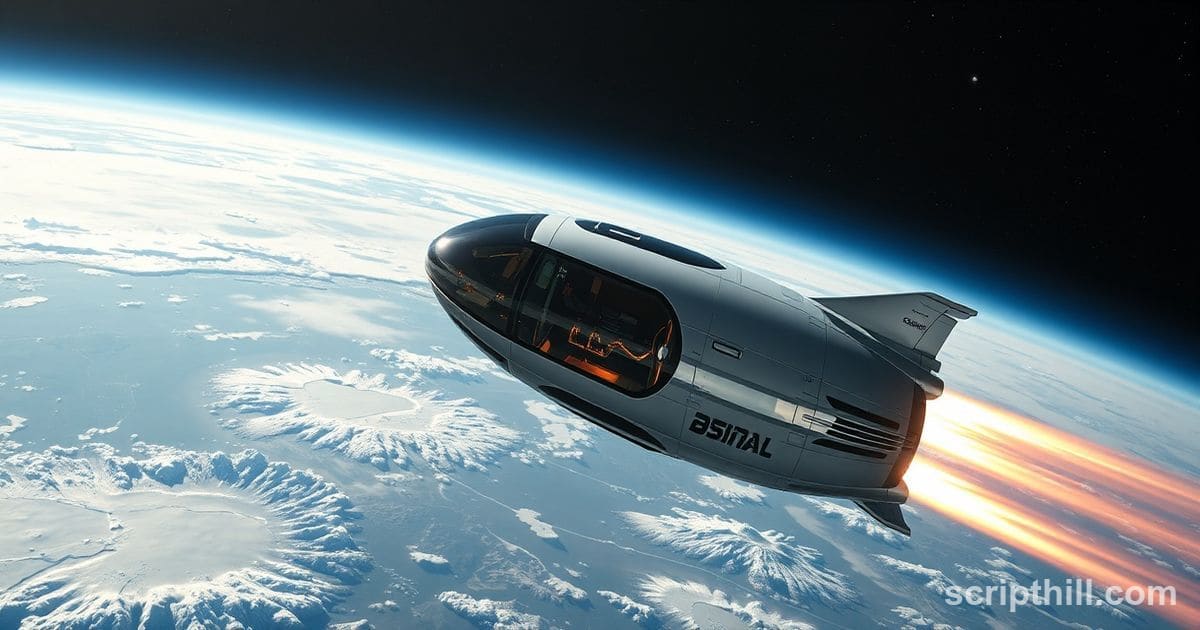
Today, space tourism is rapidly diversifying, encompassing several distinct classifications defined by altitude, duration, and the experience offered:
-
Suborbital Tourism: This category involves flights that briefly cross the Kármán line (the internationally recognized boundary of space at 100 kilometers or 62 miles) before returning to Earth. Passengers experience a few minutes of weightlessness and breathtaking views of the Earth's curvature against the blackness of space, all without achieving orbital velocity. Companies like Virgin Galactic with their SpaceShipTwo and Blue Origin with their New Shepard rocket offer this exhilarating, short-duration experience, designed to provide a taste of space at a comparatively lower cost and complexity than orbital missions.
-
Orbital Tourism: Significantly more complex and costly, orbital tourism involves reaching sufficient velocity to circle the Earth, typically for several days, often docking with destinations like the International Space Station (ISS) or purpose-built private space stations. These missions provide extended periods of weightlessness and multiple orbits of Earth, offering a truly immersive space experience. SpaceX's Crew Dragon, which has already facilitated Inspiration4 and Axiom Space missions, represents the forefront of commercial orbital human spaceflight, capable of transporting private citizens to orbit.
-
Future and Advanced Categories: Beyond orbital flights, the horizon of space tourism extends to even more ambitious endeavors.
- Lunar Tourism: Envisions journeys around the Moon or even landings on its surface. Projects like the dearMoon mission, slated to use SpaceX's Starship, aim to take private citizens on a circumlunar trajectory, fulfilling a lifelong dream for many.
- Deep-Space Tourism: Represents the most distant future, potentially involving travel to Mars or beyond, turning humanity's long-held aspirations for interstellar travel into a commercial reality for the ultra-wealthy.
This evolution from government monopoly to a vibrant commercial industry is largely fueled by the 'NewSpace' movement, where private companies are innovating to make space access more affordable and routine. Reusable rocket technology, once a distant dream, is now a commercial reality, drastically reducing launch costs. This paradigm shift means that space is no longer solely a stage for national prestige or scientific research, but also a burgeoning marketplace for adventure, exploration, and unique human experiences.
The Driving Force: Why Now?
The 'why' behind this growing industry is multifaceted. For many, it's the ultimate adventure, a chance to push personal boundaries and witness the cosmos firsthand. There's also the profound "Overview Effect," a cognitive shift reported by astronauts who experience the Earth from space, leading to a deeper understanding of our planet's fragility and interconnectedness. As astronaut Edgar Mitchell eloquently put it:
"You develop an instant global consciousness, a people orientation, an intense dissatisfaction with the state of the world, and a compulsion to do something about it. From out there on the Moon, the Earth is an island, an oasis, and we are all brothers and sisters on that island."
Furthermore, space tourism drives technological innovation, creates new economic opportunities, and satisfies humanity's inherent drive to explore. It's an industry built on ambition, pushing the boundaries of what's possible and opening the cosmos to a new generation of pioneers – not just scientists or soldiers, but curious individuals eager to touch the stars.
Current Landscape & Key Players in Commercial Spaceflight
The commercial spaceflight industry, once a domain solely for government agencies, has rapidly evolved into a vibrant arena for private enterprise. At its forefront are pioneering companies vying to make space accessible, offering distinct experiences from brief suborbital jaunts to multi-day orbital expeditions.
The Suborbital Pioneers: Virgin Galactic and Blue Origin
Leading the charge for short, high-altitude trips into space are Virgin Galactic and Blue Origin, both targeting the affluent space tourist seeking a few minutes of weightlessness and breathtaking views of Earth from the edge of space.
Virgin Galactic stands out with its unique air-launch system.
- Offerings & Spacecraft: Passengers aboard VSS Unity, a SpaceShipTwo class vehicle, are carried to approximately 50,000 feet by a carrier aircraft (VMS Eve). Unity then detaches, fires its rocket engine, and soars past the Karman Line (the internationally recognized boundary of space, 100 km or 62 miles). After a few minutes of microgravity, it glides back to a runway landing.
- Target Market: Adventure seekers and high-net-worth individuals prioritizing the "astronaut wings" experience.
- Achievements & Operations: Successfully completed numerous test flights, including carrying founder Sir Richard Branson to space in July 2021. Commercial flights officially commenced in 2023 from Spaceport America in New Mexico.
- Pricing: Currently priced at around $450,000 per seat.
- Unique Selling Proposition: The elegant, aircraft-like launch and glide return offers a distinct flight profile compared to vertical rocket launches.
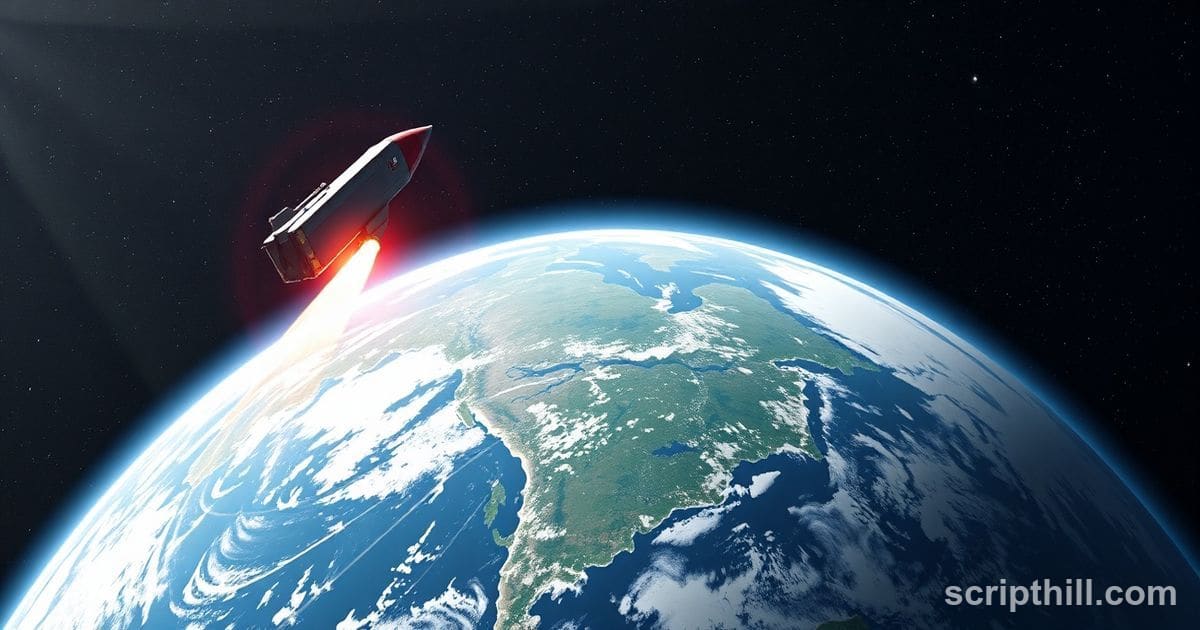
Blue Origin, founded by Amazon's Jeff Bezos, offers a fully autonomous, vertical launch and landing experience.
- Offerings & Spacecraft: Its New Shepard reusable suborbital rocket system launches a crew capsule vertically, taking passengers above the Karman Line. The capsule then separates, allowing passengers several minutes of weightlessness and panoramic views through its large windows before returning to Earth under parachutes. The booster lands vertically for reuse.
- Target Market: Similar to Virgin Galactic, appealing to those seeking a powerful, classic rocket launch experience with a focus on autonomy and comfort.
- Achievements & Operations: Conducted numerous successful uncrewed and crewed test flights, including carrying Jeff Bezos and other notable figures. Commercial passenger flights began in 2021 from their West Texas launch site.
- Pricing: Undisclosed, but generally understood to be competitive with Virgin Galactic's offering, with some early estimates suggesting prices in the millions for initial seats.
- Unique Selling Proposition: Fully autonomous flight, largest windows in space, and the thrilling experience of a traditional rocket launch and landing.
The Orbital Frontier: SpaceX
SpaceX, led by Elon Musk, operates on a different scale, focusing on orbital and eventually interplanetary travel.
- Offerings & Spacecraft: Utilizes its Falcon 9 rocket and Crew Dragon capsule for human spaceflight. For space tourism, this means multi-day missions circling Earth, often reaching altitudes far beyond the International Space Station (ISS). Future plans involve lunar and Mars missions with its Starship vehicle.
- Target Market: High-end orbital tourists, government agencies, private researchers, and eventually, lunar and Martian explorers.
- Achievements & Operations: First private company to send humans to the ISS. Successfully executed multiple all-private orbital missions, such as Inspiration4 (the first all-civilian orbital mission) and Axiom Mission 1 (Ax-1), which sent private astronauts to the ISS. Launches primarily from Cape Canaveral, Florida.
- Pricing: Significantly higher due to the complexity and duration of orbital missions, typically tens of millions of dollars per seat (e.g., ~$55 million per seat for Ax-1).
- Unique Selling Proposition: The only private entity currently offering regular orbital human spaceflight, with unparalleled ambitions for lunar and Martian colonization. Its reusable rocket technology has revolutionized launch costs.
Comparison of Key Players
To summarize the current landscape:
| Feature | Virgin Galactic (VSS Unity) | Blue Origin (New Shepard) | SpaceX (Crew Dragon) |
|---|---|---|---|
| Experience | Suborbital, air-launched, rocket-glide, 3-4 mins microgravity | Suborbital, vertical launch, fully autonomous, 3-4 mins microgravity | Orbital, vertical launch, multi-day, sustained microgravity |
| Altitude | >80 km (FAA), >100 km (Kármán line) | >100 km (Kármán line) | >400 km (often above ISS) |
| Spacecraft | SpaceShipTwo (Unity) carried by VMS Eve | New Shepard capsule on reusable booster | Crew Dragon on Falcon 9 |
| Launch Site | Spaceport America, NM | Corn Ranch, West Texas | Cape Canaveral, FL |
| Pricing (approx.) | $450,000 | Undisclosed (reportedly $500k+) | ~$55 million (orbital) |
| Primary USP | Air-launch/glide experience | Fully autonomous, largest windows | Orbital capability, deep space ambition |
Emerging Players and Collaborative Efforts
The space tourism market is dynamic, with new players and partnerships continually emerging:
- Space Perspective: Offers a vastly different, gentler journey to the stratosphere aboard its "Spaceship Neptune," a pressurized capsule lifted by a massive space balloon. It aims for a luxury, lounge-like experience with 360-degree views, albeit below the Karman Line.
- Axiom Space: A significant player in orbital tourism, Axiom partners with SpaceX to send private astronauts to the ISS and is actively developing its own commercial space stations. They represent a bridge to truly private space habitats.
- Sierra Space: Developing the Dream Chaser space plane for cargo and future crewed missions, which could eventually offer unique orbital tourism opportunities.
- Commercial Space Stations: Future endeavors like Blue Origin's Orbital Reef (in partnership with Sierra Space, Boeing, ASU) and Starlab (from Nanoracks, Voyager Space, Lockheed Martin) aim to create destinations for researchers, manufacturers, and, inevitably, tourists, expanding orbital access significantly.
These diverse approaches signal a robust and growing market, moving beyond the initial thrill of suborbital flight to envision a future where longer stays in orbit and even lunar excursions become achievable. The operational models vary, but all share the common goal of democratizing access to space.
{"space_tourism_booking_api": {"version": "1.0","endpoints": {"/api/flights/suborbital": {"method": "GET","description": "Retrieve available suborbital flights (Virgin Galactic, Blue Origin)"},"/api/flights/orbital": {"method": "GET","description": "Retrieve available orbital missions (SpaceX, Axiom Space)"},"/api/bookings/{flightId}": {"method": "POST","description": "Submit a booking request for a specific flight","required_params": ["passengerDetails", "paymentInfo"]}}}}
Engineering the Dream: Technologies & Challenges of Space Travel
Bringing space tourism from science fiction to reality hinges on monumental feats of aerospace engineering. It's a testament to human ingenuity, pushing the boundaries of what's possible in propulsion, materials science, and human factors. The dream relies on tangible technologies and the relentless tackling of complex challenges.
Powering the Journey: Advanced Propulsion & Reusability
At the heart of space travel are advanced propulsion systems. While chemical rockets remain the workhorse for lifting payloads and people into orbit, significant strides are being made to enhance their efficiency and reliability. The most revolutionary development in this area for space tourism is undoubtedly reusable rocket technology. Companies like SpaceX have pioneered the ability to land and refly the first stages of their Falcon 9 rockets, drastically cutting launch costs. Blue Origin's New Shepard also demonstrates full reusability for suborbital flights, returning both its booster and crew capsule safely to Earth. This paradigm shift from single-use rockets is crucial for making space travel economically viable for a broader market.
The reusability aspect isn't just about cost; it's about reliability and turn-around time, akin to commercial aviation. Engineers must design systems that can withstand the rigors of multiple launches and re-entries with minimal refurbishment.
# Simplified conceptual check for reusable rocket systemsdef perform_pre_flight_checks(booster_id):if check_structural_integrity(booster_id) and \check_engine_health(booster_id) and \check_fuel_lines(booster_id) and \check_avionics(booster_id):return "READY_FOR_FLIGHT"else:return "MAINTENANCE_REQUIRED"# Example usage:# status = perform_pre_flight_checks("Falcon9-B1069")# print(status)
Designing for Comfort and Safety: Spacecraft & Life Support
Spacecraft design for tourism faces a unique duality: it must be robust enough for the unforgiving space environment, yet comfortable and aesthetically pleasing for civilian passengers. Key considerations include:
- Habitability: Interiors are designed with large windows or cupolas to maximize views of Earth and space. Comfort, seating, and even interior aesthetics play a role, moving beyond purely functional designs. For orbital missions, managing the zero-gravity environment for novice travelers is also critical.
- Safety & Re-entry Systems: Redundant safety systems, emergency abort capabilities, and robust re-entry systems (like heat shields and parachutes or retro-thrusters) are non-negotiable. The vehicle must be able to withstand the extreme temperatures and forces of re-entry.
- Life Support: Closed-loop life support systems for air, water recycling, and waste management are essential, especially for longer orbital stays. For short suborbital flights, simpler open-loop systems may suffice, but precise environmental control (temperature, pressure, oxygen levels) is always paramount.
Ground Infrastructure: The Earth-Side Backbone
The journey begins and ends on Earth, relying on sophisticated ground infrastructure. This includes advanced launch pads, integrated mission control centers, and specialized training facilities for space tourists. The logistics of processing passengers, preparing vehicles, and managing launch windows demand intricate coordination and robust systems.
Overcoming Engineering Hurdles: The Path Ahead
Despite incredible progress, several significant engineering challenges must still be overcome to make space tourism truly accessible and routine:
-
Cost Reduction: While reusability is a huge step, further innovations in manufacturing, operational efficiency, and propellants are needed to drive per-seat costs down from millions to potentially hundreds of thousands.
-
Safety Protocols & Certification: Establishing comprehensive, universally accepted safety standards and certification processes for commercial human spaceflight is paramount. This includes:
- Robust abort systems for various failure scenarios.
- Rigorous vehicle testing and qualification.
- Clear emergency protocols and crew training for critical situations.
- International regulatory frameworks for liability and operations.
-
Radiation Shielding: For orbital and especially lunar tourism, protecting passengers from space radiation—both chronic Galactic Cosmic Rays (GCRs) and unpredictable Solar Particle Events (SPEs)—is a critical challenge. Passive shielding (thick materials) is heavy, while active shielding (magnetic fields) is complex and still largely experimental.
As aerospace engineer Dr. Jeffrey Hoffman once put it:
"The challenge of radiation in space is profound. It’s not just about surviving a single event, but about long-term health, and designing a spacecraft that balances protection with performance is a true engineering conundrum."
-
Astronaut Training for Civilians: Developing effective yet manageable training programs for civilians with varying physical conditions is crucial. These programs must prepare tourists for the unique physical sensations, emergency procedures, and basic operations without requiring years of specialized training. This balances imparting critical knowledge with the desire for a wide tourist demographic.
Beyond Earth Orbit: The Future of Space Tourism
The aspiration to venture beyond Earth's immediate vicinity ignites a new frontier for space tourism, pushing the boundaries of human experience and technological innovation. This future envisions not just fleeting orbital trips, but extended stays in colossal space hotels, leisure trips to lunar outposts, daring flybys of Mars, and even visits to distant asteroids. These aren't merely science fiction tropes but the logical progression of an industry rapidly maturing.
The next generation of space hotels will move beyond simple capsules, evolving into rotating structures capable of generating artificial gravity. Imagine multi-deck resorts like the proposed Orbital Assembly Corporation's Voyager Station or Gateway Foundation's Von Braun Station, featuring zero-G sports arenas, gourmet restaurants, observation decks, and luxury suites offering unparalleled views of Earth and the cosmos. Beyond Earth orbit, these hotels could serve as waypoints for deeper space journeys.
Lunar tourism represents another significant leap. With projects like NASA's Artemis program and various private initiatives aiming for permanent lunar bases, the Moon could become a unique vacation destination. Tourists might explore historical Apollo landing sites, drive lunar rovers across breathtaking craters, or even participate in low-gravity sports. Scientific outposts could offer educational programs, allowing tourists to engage directly with lunar research.
Further afield, the allure of Mars is undeniable. While colonization remains a long-term goal, orbital flybys could become an early form of deep-space tourism, offering passengers an awe-inspiring close-up view of the Red Planet. Eventually, asteroid visits could offer a truly unique, pioneering experience, perhaps combining tourism with nascent asteroid mining operations, allowing visitors to witness the extraction of valuable resources firsthand in an entirely alien environment.
Realizing these ambitious endeavors requires an unprecedented infrastructure build-out, transcending what exists today:
- Heavy-lift Launch Vehicles: Consistent access to space at scale, like SpaceX's Starship or Blue Origin's New Glenn, is foundational.
- In-Space Refueling Depots: Critical for economical beyond-LEO travel, allowing spacecraft to be refueled for long-duration missions.
- Advanced Propulsion Systems: Technologies like nuclear thermal or electric propulsion will shorten transit times to distant destinations.
- Orbital Assembly & Manufacturing: The ability to construct large habitats and spacecraft in orbit, minimizing launch mass.
- Closed-Loop Life Support & Radiation Shielding: Essential for protecting occupants during extended deep-space missions.
The economic implications of such widespread space access are monumental. The nascent space economy, currently valued in hundreds of billions, is projected to grow into a multi-trillion-dollar industry. This expansion will fuel new sectors, create millions of jobs, and drive global innovation.
"The true potential of humanity will be unleashed not when we merely visit space, but when we live, work, and play amongst the stars."
Consider the potential for market growth across various segments:
| Tourism Segment | Initial Investment (Billions USD) | Projected Market Size (Trillions USD/decade) | Key Challenges |
|---|---|---|---|
| Orbital Space Hotels | 50-100 | 0.5 - 1.0 | Artificial gravity, operational costs |
| Lunar Base Tourism | 100-200 | 1.0 - 2.0 | Radiation, habitat resilience, transport |
| Mars Orbital Flybys | 200-300 | 0.2 - 0.5 | Long transit times, propulsion efficiency |
| Asteroid Expeditions | 300+ | 0.1 - 0.3 | Navigation, remote logistics, deep space safety |
Beyond economic gain, the scientific and cultural benefits of widespread space access are profound. Widespread human presence on the Moon and in deep space will accelerate scientific discovery, from astrobiology research to planetary defense strategies. Culturally, seeing Earth from afar—the "overview effect"—could be experienced by millions, fostering a profound sense of global unity and environmental stewardship. It will inspire new generations, drive innovation, and broaden the human perspective, solidifying our place as a multi-planetary species.
Navigating the Cosmos: Regulation, Ethics, and Accessibility
The burgeoning space tourism industry, while promising exhilarating voyages, navigates a complex cosmos of regulatory, ethical, and accessibility challenges that extend far beyond mere engineering feats. As private entities venture into what was once solely the domain of nation-states, the legal frameworks governing space activities are undergoing a rapid evolution, striving to balance innovation with safety, sustainability, and international cooperation.
At the heart of space law lies the Outer Space Treaty (OST) of 1967, a foundational document establishing principles such as the non-appropriation of space and the moon, and defining space as the "province of all mankind." While the OST holds states responsible for national activities in space, even by non-governmental entities, its language predates the current boom in commercial spaceflight, leading to ambiguities regarding private liability and the specific safety standards required. Nationally, bodies like the FAA Office of Commercial Space Transportation (FAA AST) in the United States license commercial launches, re-entries, and operations of launch sites, focusing primarily on the safety of the uninvolved public rather than the spaceflight participants themselves, who currently fly under an "informed consent" model. This approach highlights the industry's infancy, where participants acknowledge inherent risks, similar to early aviation barnstorming.
Liability in space is a particularly intricate web. The Convention on International Liability for Damage Caused by Space Objects (1972) holds launching states absolutely liable for damage caused by their space objects on Earth or to aircraft in flight, and fault-based liable for damage elsewhere in space. However, defining the chain of responsibility from a commercial operator to a passenger in various scenarios, especially across international borders, remains an area of active legal development. Establishing harmonized international safety standards, rather than disparate national ones, is crucial for fostering global confidence and interoperability in the sector.
| Regulatory Aspect | National Scope (e.g., USA) | International Scope (e.g., UN Treaties) |
|---|---|---|
| **Primary Focus** | Licensing, public safety, launch/re-entry procedures for commercial operations. | State responsibility, non-appropriation, peaceful use, damage liability. |
| **Key Authority** | FAA AST (USA), national space agencies/ministries. | UN Office for Outer Space Affairs (UNOOSA) facilitates discussions, treaties. |
| **Safety Standards** | Evolving, often "informed consent" for participants; prescriptive for public. | General principles; no universally agreed commercial spaceflight safety standards yet. |
Beyond the legalities, space tourism grapples with profound ethical questions:
- Environmental Impact and Space Debris: The increasing number of launches and satellites raises alarms about orbital congestion and the potential for a "Kessler Syndrome" – a cascade of collisions creating an impenetrable shroud of debris. Operators face growing pressure to demonstrate responsible debris mitigation strategies, including deorbiting defunct spacecraft and minimizing launch waste.
- Equitable Access: Currently, space tourism is an exclusive luxury. The ethical debate centers on whether space should remain a playground for the ultra-rich or if mechanisms can be established to ensure broader, more diverse participation, reflecting humanity's shared stake in the cosmos.
- National Security Implications: As more nations and private entities gain access to spaceflight capabilities, concerns arise regarding the potential for dual-use technologies, surveillance, and the weaponization of space. Clear international norms and transparency measures are vital to prevent miscalculation and conflict.
- Psychological Effects on Tourists: While astronauts undergo rigorous selection and training, space tourists may experience unexpected psychological challenges from isolation, microgravity, or the profound "overview effect." Adequate psychological screening, support, and training protocols are essential to ensure well-being.
"The democratization of space is not just about making tickets cheaper; it's about redefining who belongs in space and what responsibilities come with that privilege."
Ultimately, the vision of democratizing space hinges on overcoming these hurdles. It requires not only technological advancements to reduce costs but also a concerted global effort to forge comprehensive international regulations, uphold stringent safety and environmental standards, and address the inherent inequalities of access. Making space accessible to a broader population means transforming it from a niche adventure into a sustainable frontier for all of humanity, demanding thoughtful stewardship from both governments and private industry.

